

Sustainability
Decarbonisation and energy transition
Overview
Cleaner energy starts here
The world needs time to move to renewable energy, and it needs lower-carbon bridging fuels to cut emissions today while this essential transition takes place.
We’re doing our part through projects like the world’s first net zero LNG export facility; our joint venture with TotalEnergies to supply Indonesia and Singapore with solar power; and using organic waste to cut aviation emissions by up to 80 per cent.
Accelerating the energy transition is critical in reducing our global carbon emissions.

Our contributions
The world’s first net zero LNG export facility
Woodfibre LNG will be the world’s first net zero LNG export facility, currently under construction in British Columbia, Canada. Through the use of renewable hydroelectricity and other best-in-class technologies, the carbon intensity of the LNG from Woodfibre LNG will be just 0.04 tonnes of CO2e per tonne of LNG – four times less than the provincial benchmark for carbon intensity for LNG projects.
Woodfibre’s Net Zero Roadmap outlines how the facility will be net zero from 2027, 23 years ahead of Canadian government requirements. Uniquely, we’ve also committed to being net zero at site during construction, avoiding GHG emissions wherever possible, and offsetting those that remain.
When completed Woodfibre will produce approximately 2.1 million tonnes of LNG per year, which can be used to complement solar and wind power to reduce global dependence on coal-fired plants.
Sharing Canadian natural gas with the world
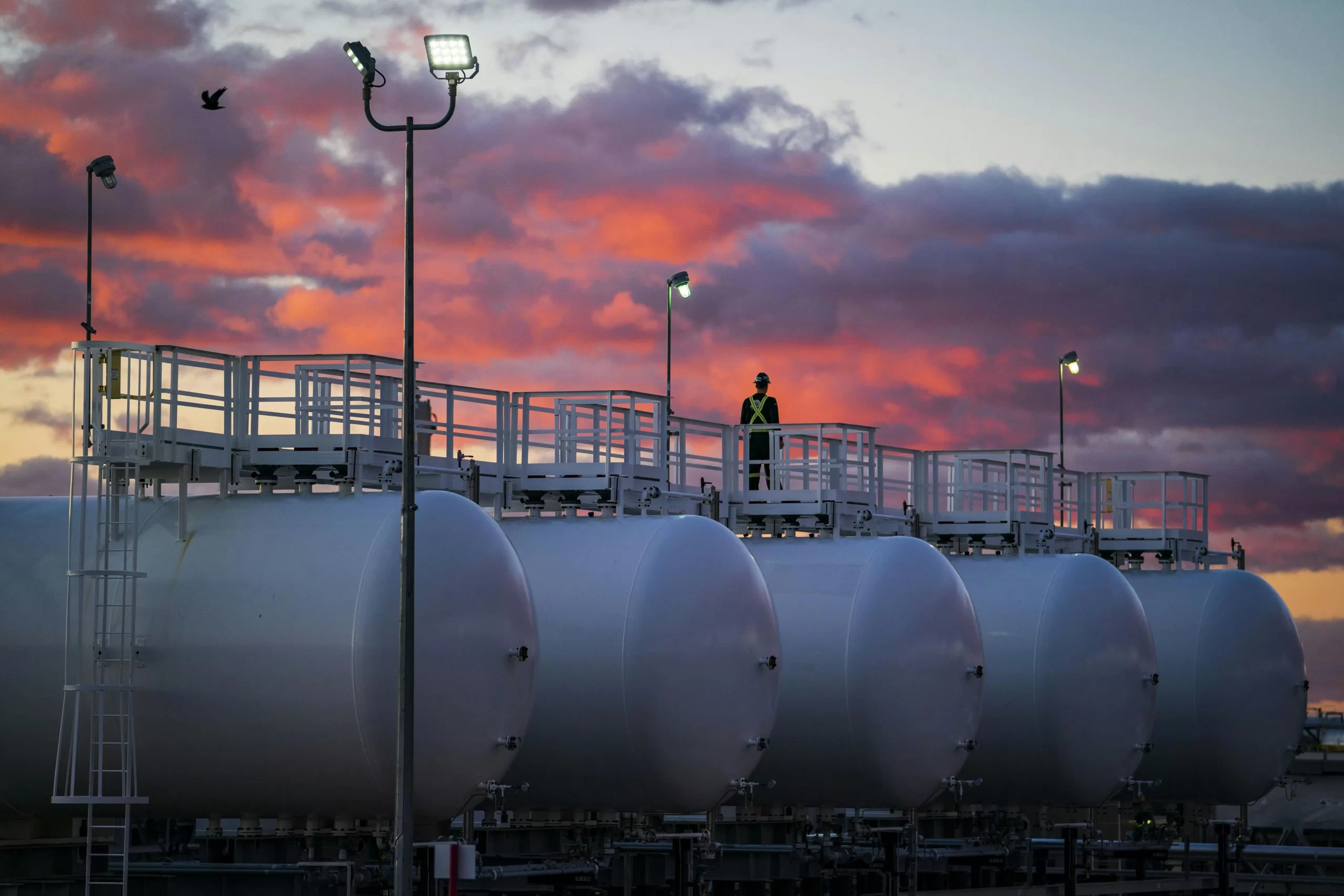
Pacific Cambrian Energy (PCE) produces some of the cleanest natural gas in the world.
It’s just the second natural gas producer in North America to achieve an EO100™ Standard Certification from Equitable Origin. Adhering to some of the most rigorous climate action regulation in the world, PCE’s emissions intensity is one of the lowest in the sector in British Columbia.
PCE will supply natural gas to Woodfibre LNG, providing growing Asian economies with a cleaner alternative to coal and helping to drive the energy transition.
Reducing emissions from air travel
Through a joint venture with Moeve, we’re constructing the largest second generation biofuels plant in Southern Europe to produce up to 500,000 tons of sustainable aviation fuel (SAF) per year.
SAF reduces CO2 emissions by up to 80 per cent compared to traditional jet fuel, and is compatible with existing planes and infrastructure, meaning it’s cutting carbon right now.
By leveraging Apical’s global supply chain we’re able to provide organic waste and residue as a feedstock in a transparent and traceable manner, helping make air travel more sustainable while contributing to a more circular economy.
Reducing our carbon footprint
Cleaner and renewable energy is a major part of our efforts to reduce our carbon emissions. We’re increasingly powering our operations with less fossil fuels, through the use of biomass, solar and other forms of cleaner energy.
In Brazil, Bracell has built the world’s first 100 per cent fossil fuel free pulp mill, using biomass to power operations and sharing surplus energy with the grid, where it powers up to 750,000 homes.
In Indonesia, we are constructing what will become one of the country’s largest private solar installations, capable of generating 50 MW of clean energy. Combined with our solar installations in Brazil and China, RGE had more than 100 MW of capacity by 2025.
And Asian Agri has constructed 11 biogas plants which convert organic waste into methane, powering its palm oil mills while also providing renewable energy to neighbouring communities.
Through our 2030 commitments, each of our businesses have their own science-bound targets to reduce emissions intensity and increase the use of renewable energy.